Top 10 Crypto Exchanges: DEXs Just Broke In
For years, the top 10 crypto exchanges by volume looked the same. Centralized platforms like Binance, Coinbase, and OKX dominated every ranking. That changed recently, and it’s a bigger deal than most headlines gave it credit for. Two decentralized exchanges, PancakeSwap and Uniswap, broke into that same top 10 list. They now rank ahead of established centralized names like Bitget, OKX, Coinbase, and Upbit. This guide breaks down exactly what happened, why it matters, and what it signals for the CEX vs. DEX debate going forward.
The Numbers Behind This Shift
Between August 2025 and January 2026, PancakeSwap processed $0.55 trillion in cumulative trading volume. Uniswap processed $0.54 trillion over the same period. That placed both platforms ahead of several major centralized exchanges in the same six-month window. Binance still led everything by a wide margin, clearing $3.54 trillion in spot volume and capturing 39.6% market share across all tracked exchanges. However, the fact that two DEXs now sit above household-name centralized platforms marks a genuine turning point, not just a marginal gain.
This didn’t happen overnight. DEX market share of total spot trading volume has doubled over two years, climbing from 6.9% in January 2024 to 13.6% in January 2026. In dollar terms, absolute DEX spot volume more than doubled too, growing from $95.86 billion to $231.29 billion during that same window.
Why This Ranking Shift Actually Happened
A few forces converged to push DEXs this far up the rankings. First, DEX platforms list tokens at a completely different scale than centralized exchanges do. Uniswap alone listed 13.69 million tokens during the tracked period. Pump.fun listed 5.01 million. Compare that to Upbit, Crypto.com, and OKX, which each listed 100 tokens or fewer over the same stretch. Centralized exchanges review and approve tokens individually. Decentralized exchanges let anyone create a trading pair permissionlessly instead.
Second, the broader token creation boom fed directly into this gap. GeckoTerminal recorded 24.04 million new tokens created between January 2025 and January 2026 alone. Even the most active centralized exchange listed only a fraction of a percent of that total. The widest-coverage DEX listed nearly 57% of everything created. That volume of new tokens needs somewhere to trade immediately, and centralized exchanges simply can’t approve new listings fast enough to keep pace.
Third, hybrid platforms changed what a “DEX” can even mean in practice. Hyperliquid, which we cover in detail in our guide to how Hyperliquid actually works, combines a fully on-chain order book with execution speed that rivals centralized exchanges. This model attracted serious trading volume that previously would have stayed on centralized platforms by default.
What This Doesn’t Mean
It’s worth being precise here, since it’s easy to overstate this shift. Binance alone still processes more volume than PancakeSwap and Uniswap combined. Centralized exchanges still control the vast majority of global crypto trading overall. This breakthrough doesn’t mean DEXs have overtaken CEXs as a category. It means two specific, well-executed decentralized platforms proved they can compete directly with established centralized brands on raw volume, something that seemed unlikely just two years ago.
Why Token Selection Explains So Much of This Story
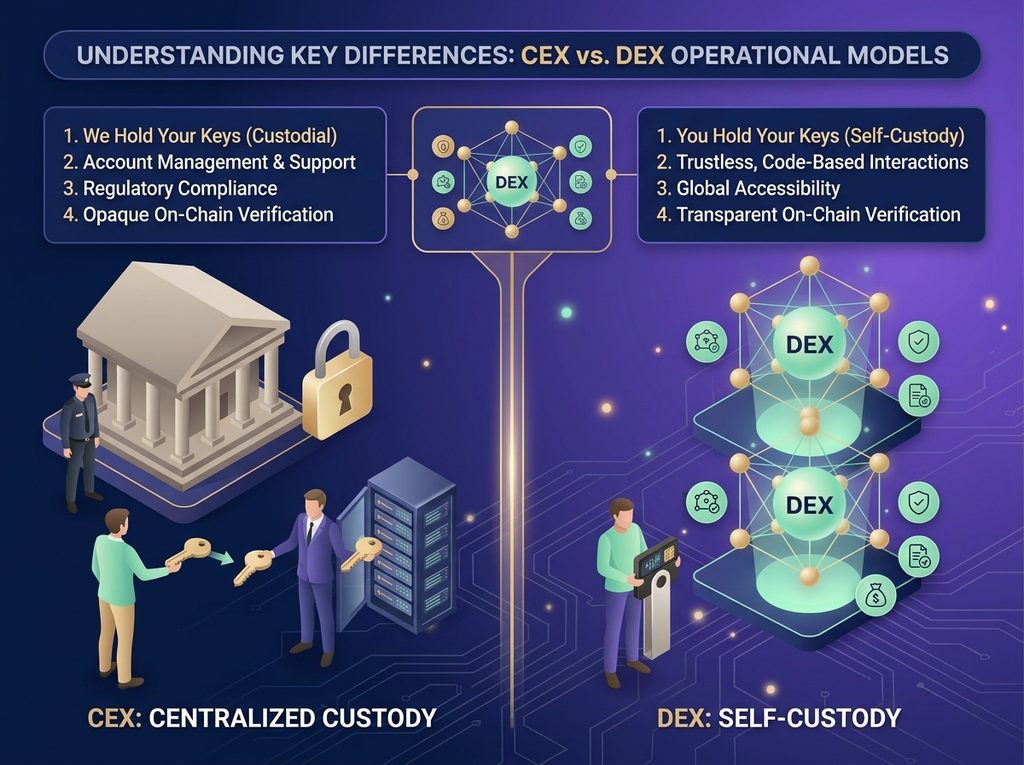
The listing gap between these two exchange types reveals a deeper philosophical difference, not just a technical one. Centralized exchanges act as gatekeepers. They review projects, assess risk, and approve tokens before users can trade them. This protects users from certain scams, but it also means legitimate new projects wait, sometimes for months, before reaching a major centralized platform.
Decentralized exchanges skip that gatekeeping entirely. Anyone can create a trading pair the moment a token exists. This openness is exactly why Uniswap’s listing count reached 13.69 million while OKX’s stayed under 100. That same openness cuts both ways, though. It means far more low-quality or outright fraudulent tokens exist on DEX platforms than you’ll ever find on a curated centralized exchange. If you’re new to trading, our guide to CEX vs. DEX covers this trade-off, along with several others, in more detail.
What Traders Should Actually Take From This
If you already trade primarily on centralized exchanges, nothing forces you to change anything today. Coinbase, Kraken, and similar platforms remain fully functional, well-regulated options with strong security track records. That said, this shift is worth understanding for a few practical reasons.
First, if you’re hunting for a newly launched token, a DEX increasingly offers access weeks or months before that same token might reach a centralized exchange, if it ever does. Second, if execution speed and self-custody both matter to you, hybrid platforms like Hyperliquid now offer a genuine middle path that didn’t exist at this scale even a year ago. Third, this trend suggests DEX infrastructure has matured enough to handle serious volume reliably, a meaningful signal if you’ve held back from decentralized trading due to concerns about liquidity or reliability specifically.
Is This the Start of a Bigger Shift?
That’s the real question worth asking, and we dig into it more deeply in our analysis of whether DEX market share doubling signals the end of CEX dominance. The short answer here: this specific ranking milestone matters as a symbol more than as proof of an irreversible trend. Centralized exchanges still hold enormous structural advantages, including easier fiat on-ramps, regulatory clarity, and customer support that decentralized platforms can’t fully replicate. What changed is that “DEX” no longer automatically means smaller, slower, or less liquid than a centralized alternative. For a full breakdown of how today’s leading platforms stack up by volume across both categories, see our guide to the best crypto exchanges by trading volume in 2026.
How to Think About This as an Everyday Trader
You don’t need to pick a permanent side between CEX and DEX platforms. Many experienced traders already use both, choosing a centralized exchange for straightforward buying and selling, and a decentralized platform for accessing tokens that haven’t reached centralized listings yet. This ranking shift simply confirms that choosing a DEX for serious volume no longer means accepting worse execution or thinner liquidity than you’d get on a centralized platform. The gap that used to justify sticking exclusively with centralized exchanges has narrowed considerably, and for two platforms specifically, it’s effectively closed.
The Bottom Line
Two decentralized exchanges just did something that would have seemed implausible only two years ago. They out-traded some of the biggest centralized names in the industry. This didn’t happen because centralized exchanges got worse. It happened because DEX infrastructure got dramatically better, faster listings, hybrid execution models, and genuine volume at scale. Whether or not this specific ranking holds next quarter, the broader trend behind it (DEX market share doubling in two years) looks unlikely to reverse. For the complete data behind this shift, straight from the source, see CoinGecko’s 2026 CEX and DEX Trading Activity Report.
FAQs
Which DEXs entered the global top 10 exchanges?
PancakeSwap and Uniswap both broke into the top 10 crypto exchanges by cumulative volume between August 2025 and January 2026, ranking ahead of centralized platforms including Bitget, OKX, Coinbase, and Upbit.
Does this mean DEXs now handle more volume than CEXs overall?
No. Binance alone still processes more volume than PancakeSwap and Uniswap combined, and centralized exchanges still control the large majority of total crypto trading volume globally.
Why do DEXs list so many more tokens than centralized exchanges?
Decentralized exchanges allow anyone to create a trading pair permissionlessly, with no approval process. Centralized exchanges review and approve each token individually, which naturally limits how many they list.
Is it riskier to trade on a DEX because of this open listing system?
It can be. The same openness that lets DEXs list millions of tokens also means many low-quality or fraudulent tokens exist alongside legitimate projects, so extra research matters more on decentralized platforms.