CD Rates vs Savings Rates: Why They’re Diverging
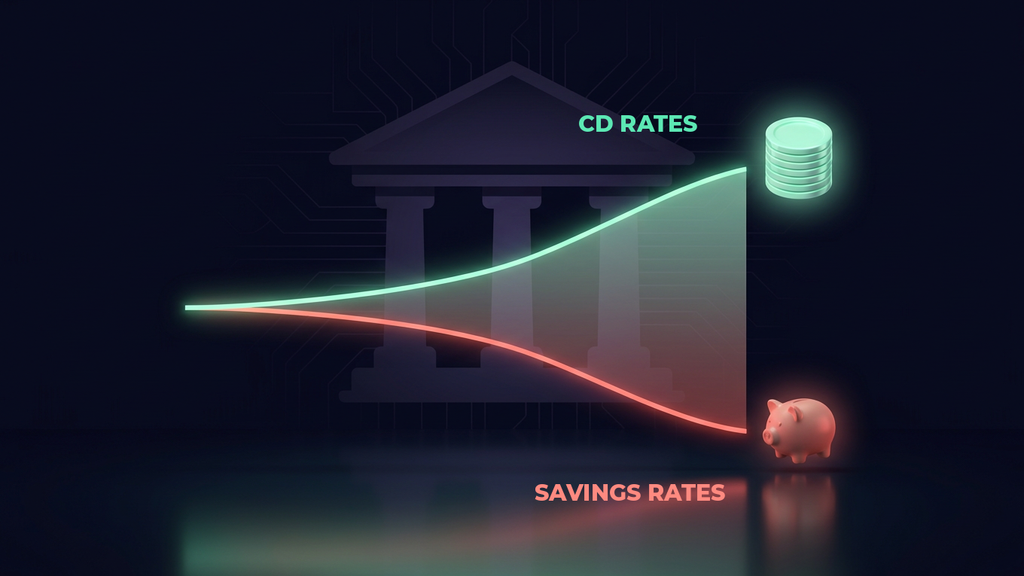
Something unusual is happening with CD rates vs savings rates right now. Top CD yields have climbed for five consecutive months. Meanwhile, the national average savings rate sits stuck at just 0.38%, according to FDIC data. Normally, these two numbers move together. Right now, they don’t. This guide breaks down exactly why that’s happening, and what it means for where you should actually put your cash.
The Numbers Behind This Divergence
CD rate increases have become the clear pattern lately. In a recent tracking cycle, 82.3% of monitored CDs showed rate increases, up from roughly two-thirds just two months earlier. Top online CD yields now hover around 4.00% APY. Compare that to the 0.38% national savings average, and the gap looks almost impossible to explain at first glance.
Why CD Rates Are Actually Rising
Here’s the key shift most coverage misses. The Federal Reserve held its benchmark rate steady through most of 2026. However, expectations about what comes next flipped dramatically. Earlier in the year, most analysts expected further rate cuts. By mid-2026, inflation running above the Fed’s target changed that outlook. Three Fed policymakers even voted for a rate increase at a recent meeting.
Banks price new CDs based on where they expect rates to head, not just where rates sit today. That outlook shifted from “more cuts likely” to “a hike is possible.” Banks responded with a real incentive to raise rates on new CDs. Higher rates help them lock in deposits now, before they potentially need to pay even more to attract savers later.
Why Savings Account Rates Haven’t Caught Up
Savings accounts work differently. Their rates track the current environment directly. They don’t price in future expectations the way a fixed-term CD does. Many online banks are still adjusting savings yields downward from the three Fed rate cuts that hit in September, November, and December of 2025. That downward drift takes time to fully play out.
There’s also a documented pattern worth understanding here. CD yields tend to fall faster than they rise. One clear example: Sallie Mae’s 12-month CD dropped from 5.15% in June 2024 to just 4.20% by June 2025, a sharp one-year decline. Savings rates followed a similarly quick downward path after those 2025 cuts. Now that the outlook has turned more hawkish, CD rates are reacting quickly in the other direction. Savings rates, tied more to present conditions than future bets, are simply lagging behind that shift.
Competition Plays a Role Too
Fed policy isn’t the only factor at work here. Banks and credit unions also set rates based on their own funding needs, loan demand, and how badly they want to compete for deposits right now. This means CD rates can keep climbing. That’s true even if the Fed’s next move remains genuinely uncertain. J.P. Morgan researchers currently expect the Fed’s rate to stay unchanged through the rest of 2026, with a possible cut not arriving until September 2027. That kind of prolonged pause gives banks more room to compete aggressively on CD rates. They’re not bracing for an imminent cut that would force yields back down again soon.
What This Actually Means for Your Money
If you have cash you won’t need for a set period, locking in a CD now makes real sense while yields remain elevated. A CD guarantees your rate for the full term, protecting you if rates eventually reverse course again. We cover the connection between Fed policy and your accounts more broadly in our guide to how a Fed rate decision affects your savings and loans.
If you need your money to stay liquid, don’t assume the national savings average reflects your best option. The top high-yield savings accounts still pay far more than that 0.38% national figure, even though they trail today’s best CD yields. Our guide to the best high-yield savings accounts covers specific options worth comparing before you settle for whatever rate your current bank happens to offer.
A Practical Middle Ground: CD Laddering
If you’re unsure whether to lock in a CD or stay flexible, a CD ladder splits the difference. You divide your savings across CDs with different maturity dates instead of committing everything to one term. As each CD matures, you can reinvest at whatever the current rate happens to be, or pull that portion out if you need the cash. This approach captures today’s higher CD rates on part of your savings while keeping the rest more adaptable to whatever happens next.
The Bottom Line
CD rates vs savings rates are telling two different stories right now because they respond to different signals. CDs price in where the Fed is likely headed next, and that outlook just turned more hawkish. Savings accounts track current conditions more directly, and they’re still catching up to cuts made months ago. Whichever account type fits your situation better, don’t let the national averages fool you into thinking today’s rates are all similarly weak. For official, up-to-date national deposit rate data, see the FDIC’s national rates and rate caps report.
FAQs
Why are CD rates rising if the Fed hasn’t raised rates?
Banks price new CDs based on expected future rate movements, not just current rates. Expectations shifted toward a possible rate hike in 2026, so banks raised CD yields to stay competitive and lock in deposits ahead of that possibility.
Why haven’t savings account rates risen along with CD rates?
Savings account rates track current conditions more directly and are still adjusting downward from Fed rate cuts made in late 2025. That adjustment takes time to fully play out, creating a temporary lag behind CD rate movements.
Should I put my money in a CD or a savings account right now?
It depends on whether you need liquidity. A CD locks in today’s higher rate for a fixed term, while a high-yield savings account keeps your money accessible, though typically at a somewhat lower rate than a top CD offers right now.
What is a CD ladder, and how does it help?
A CD ladder splits your savings across CDs with different maturity dates, letting you capture today’s rates on part of your money while keeping other portions flexible enough to reinvest or withdraw as each CD matures.